A lowpoly, game-ready 3D model of the Hog Islander Type A (Design 1022) — an iconic Emergency Fleet Corporation cargo ship designed during World War I. 110 ships were built between 1918 and 1922, used by many countries before, during, and right after World War II.
This asset include 4 historically accurate textures:
• Civilian Merchant Service (1919–1959): Classic black hull with white superstructure.
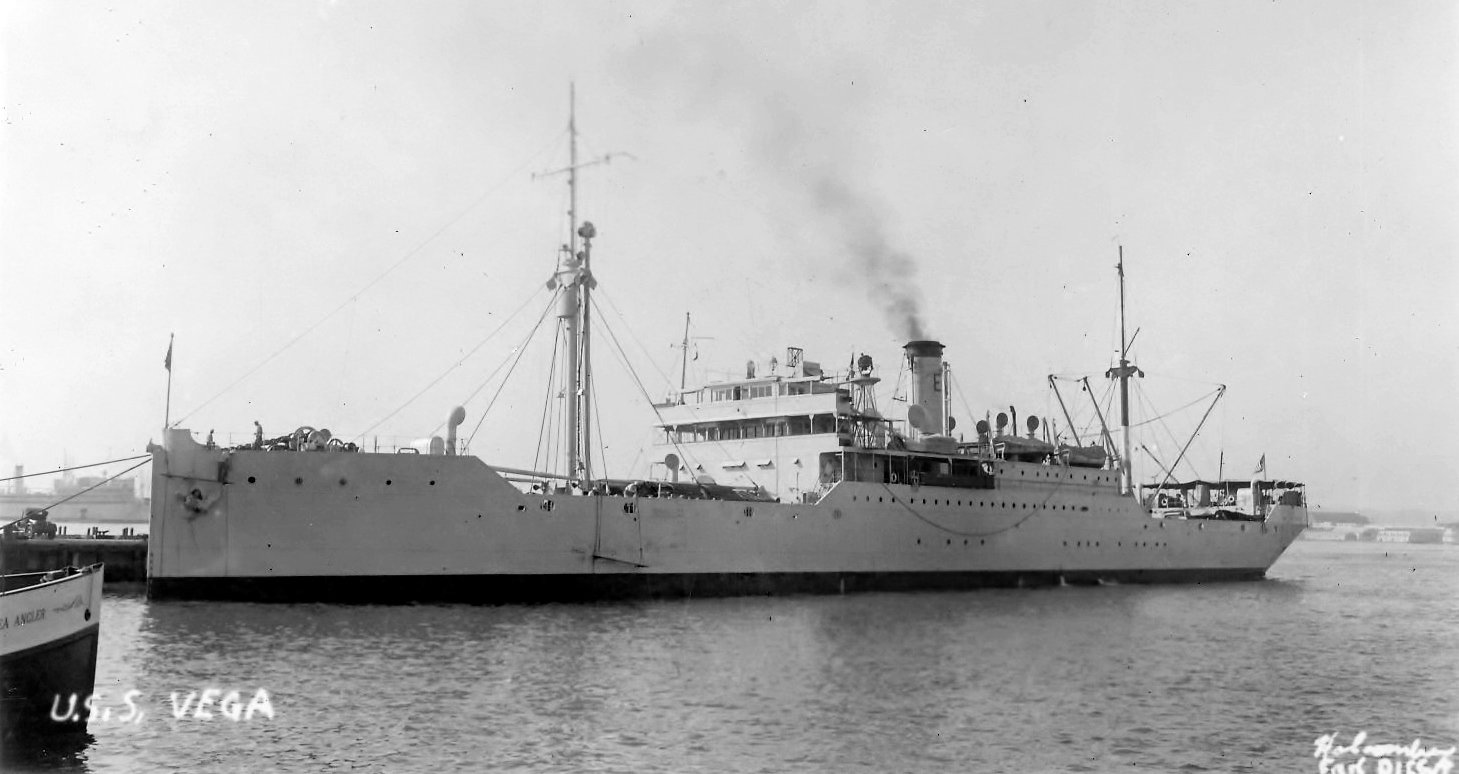
• US Navy Auxiliaries (1920-1940): Sirius-Class Cargo Ships and others based on Design 1022 in pre-ww2 paint sheme
• Convoy Grey (1939–1942): Matte wartime grey skin for early Unarmed/DEMSE merchant vessels operated in early Atlantic supply convoys.
If you’re interested in the full historical record of all Hog Islander Type A ships (EFC Design 1022), I recommend checking the original McKellar contract document:
EFC Design 1022 — Contract Vessel List (PDF)
This document contains:
the complete list of all Design 1022 ships built;
the month and year, or only the year, of completion
the initial operators and owners;
all renamings throughout each ship’s service life;
transfers between companies or countries;
the final fate of every vessel (sold, scrapped, sunk, repurposed, etc.).
It’s the most comprehensive contract‑level registry available for the Hog Islander Type A program and an excellent resource for anyone researching interwar and early‑WWII merchant shipping.
For this model I tried to create a compact but historically meaningful texture set (unarmed version) that allows developers to cover all major periods and situations in which a Hog Islander Type A (Design 1022) could realistically appear from 1919 up to the late 1950s.
With just one model and four texture variants, you can recreate:
a full early‑WW2 convoy (civilian ships, MoWT‑repainted vessels, and neutral‑marked American freighters),
a busy American port scene of the late 1930s–early 1940s, where civilian ships, neutral‑marked US vessels, grey‑painted MoWT ships, and US Navy auxiliaries could all be present at the same time,
interwar merchant traffic,
pre‑war neutrality operations,
early wartime logistics before Liberty Ships became dominant,
post‑war civilian service throughout the 1940s and 1950s.
These ships were extremely common and often appeared together in mixed groups — civilian freighters, neutral‑marked US ships, grey‑painted MoWT vessels, and Navy auxiliaries could all be present in the same harbor or anchorage.
The texture set is designed specifically to let you represent this diversity without needing multiple models.
An armed wartime version of the ship (with AA guns and additional equipment) may also be added later for developers who want to depict mid‑war or late‑war convoy operations.
Standard civilian paint scheme — black hull with red underwater section, light superstructure, and a funnel with a colored band. This was the typical appearance of most Hog Islander Type A ships throughout their commercial service from the early 1920s to the late 1950s.
Standard interwar U.S. Navy paint scheme — overall #5 Standard Navy Gray on hull and superstructure, with a dark funnel top.
Several Hog Islander Type A ships were used by the U.S. Navy as auxiliary cargo vessels. During the interwar period they carried no armament, and aside from the paint scheme, were almost indistinguishable from their civilian counterparts.
There were six U.S. Navy auxiliary ships based on the Hog Islander Type A design:
Unlike the previous four cargo ships, Antares and Procyon were not used for transporting bulk cargo.
They served as floating supply depots, providing fleet units with general stores and equipment.
These ships were visually distinguished by additional accommodation structures between the bridge and the funnel for the extra supply personnel (visible in the photos).
Although the model does not include these structures, it can still be used to represent these ships.
Early‑WW2 paint scheme — medium‑grey hull and superstructure, and minimal markings.
This texture represents ships already repainted according to wartime standards but still unarmed — either due to lack of time, lack of available weapons, or because they operated in relatively safer areas.
It represent ships transferred to the MoWT in 1940–1941 that had not yet received armament, as well as U.S. vessels which, after America entered the war, no longer carried Neutrality Markings but still had no weapons installed.
Example of a real ship with this paint scheme:
Carrabulle — photographed by the U.S. Coast Guard on 30 March 1942 while owned by Cuba Distilling Co., showing typical convoy grey coloration https://www.shipscribe.com/mckellar/pix3/1022-carrabulle1-h09.jpg (Torpedoed and sunk 26 May 1942 on approximately at 90°W, 25°N in the Gulf of Mexico.)
At the beginning of World War II, while the United States remained neutral, American merchant ships were required—according to U.S. Navy Neutrality Instructions (1940)—to be clearly identified as neutral vessels.
There were no strict rules or standardized designs for such markings.
Typically, ships displayed a large U.S. flag painted on the hull, usually around the mid‑section (not necessarily centered).
The paint scheme remained the standard civilian coloration of the period: black or dark‑grey hull and white or very light superstructure.
No photographs of Panamanian or Brazilian ships of this type with neutrality markings have been found.
If you have seen such photos or possess links to them, please share them — I will gladly add those variants.
If you’re interested in the Battle of the Atlantic and the early trans‑Atlantic convoy system, you may also want to check the Bangor-class Minesweeper.
 EFC Design 1022 — Contract Vessel List (PDF)